May 2nd, 2012
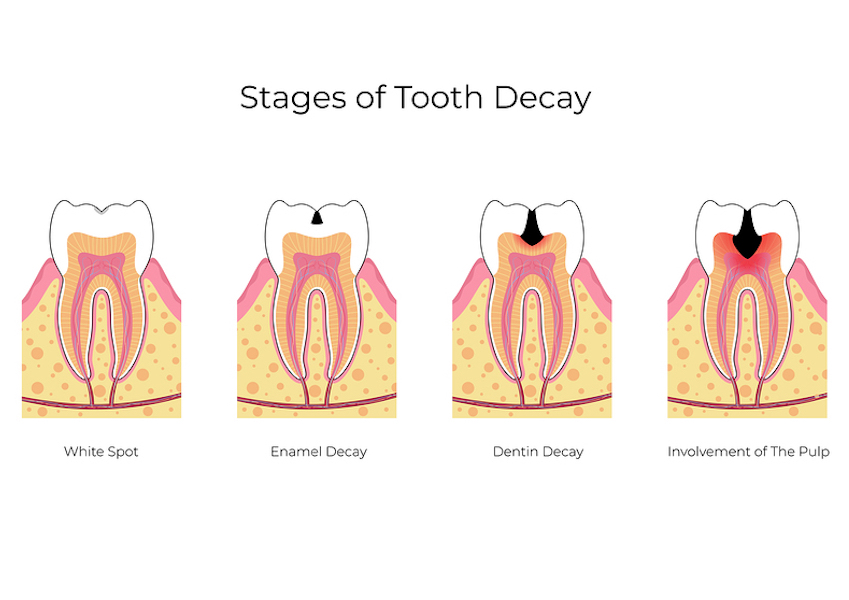
Last week we discussed how prolonged contact with acidic bacterial plaque can lead to decalcification, or demineralization, of teeth. Decalcification is one of the reasons for white spots (lesions) on teeth.
Fortunately, decalcification can be reversed. If you have white, decalcified spots on your teeth, the following are some steps you can take to reverse this condition:
• Follow proper homecare. Bacterial plaque and food debris must be removed from all tooth surfaces and the tongue at least twice a day. This can be accomplished with thorough brushing and flossing.
• Make sure your mouth is neutralized after eating and drinking. You can swish with a baking soda rinse after eating or drinking, or chew a Xylitol-containing mint or gum. Baking soda is a natural neutralizer and Xylitol is a natural sweetener that has a neutralizing effect on the bacteria in our mouths.
• Avoid grazing on foods and sipping drinks (other than water) throughout the day.
• If recommended by the hygienist or doctor, use a calcium and phosphate cream, such as MI Paste. This paste is applied to your teeth throughout the day, especially after eating and drinking. MI Paste also contains Xylitol.
• If recommended for your situation, use Clinpro 5000. This prescription-strength fluoride toothpaste contains calcium phosphate. Fluoride hardens teeth and forms a protective layer over the calcium and phosphate. This higher level of protection is needed to help restore weakened or decalcified lesions. It also helps prevent these lesions from going to the next stage and becoming dental cavities.
April 26th, 2012
Decalcification, also known as demineralization, is the loss of calcium and phosphate from the bones or teeth. It is the first stage, but a reversible stage, of dental cavities. Every time we eat acidic foods or drink acidic beverages, our mouths become acidic. It is the acid that pulls the minerals, calcium and phosphate, from the tooth structure. This causes hard enamel to be softened and weakened. The good news is that our own saliva is our body’s defense mechanism against the decalcification of our teeth. It washes the acids and food debris from our teeth and restores a neutral PH environment in our mouth. Saliva also replenishes calcium and phosphate to our teeth, a process called remineralization.
White spot lesions, or decalcified lesions, are caused from prolonged contact with acidic bacterial plaque (biofilm). The growth of this plaque is a continuous process. Plaque should be removed from all dental surfaces at least every twelve hours, and brushing and flossing are good ways to do this. When the acidic biofilm is not removed, it depletes the tooth surface of calcium and phosphate. Saliva is unable to neutralize the biofilm and the bacterial plaque is left to grow and evolve. Dry mouth can also dramatically increase the rate of decalcification, even with adequate plaque removal. Without the right amount of saliva, a dry mouth remains acidic for long periods of time. Therefore, the teeth are not replenished with calcium and phosphate, and white spots occur.
You can reverse this process with exciting new dental products and home care. We will discuss steps to help reverse white decalcified lesions in our blog and on our Facebook page next week.
March 29th, 2012
Almost everyone is aware of the benefits of fluoride for children. Tooth decay is way down since fluoride was introduced into the water supply in Grand Rapids in 1946. However, are you aware that fluoride can be equally important for aging adults? As we age our gums receed and dentin is exposed near the gum line, increasing the risk of root surface decay. Application of fluoride during your hygiene visit will dramatically reduce this root surface decay, as well as make these exposed areas more comfortable. Ask your hygienist about the benefits of adult fluoride for you at your next visit.
March 22nd, 2012
Dental X-rays are an essential and invaluable tool to help assist us in evaluating your oral health. With X-rays, we can see what’s happening beneath the surface of your teeth and gums and identify oral health issues otherwise hidden during a visual exam, including:
• small areas of decay between the teeth or below existing restorations (fillings)
• infections in the bone
• periodontal (gum) disease
• abscesses or cysts
• developmental abnormalities
• types of tumors
If left untreated, these problems can lead to expensive, time-consuming, and painful conditions, so it’s important to find and treat them early.
Dental X-rays are extremely safe, and our team is certified in the proper use of our digital X-ray equipment. The amount of radiation that you are exposed to from dental X-rays is very small compared to your daily exposure from things like atmospheric radiation and naturally-occurring radioactive elements, as well as medical X-rays you may have gotten at your doctor’s office or hospital. In fact our digital system dramatically decreases the already minimal amount of exposure even further. We try to be as conservative as possible when prescribing x-rays but do need them to see what is going on where our eyes can't see.
March 1st, 2012
Toothpaste is a great product that we all use several times a day. Unfortunately, some toothpastes can be detrimental to your teeth. Many of the “whitening” toothpastes are abrasive and remove enamel as well as stains. Our recommendation from Dr. Bruce Stewart's office is that you stay away from highly abrasive toothpastes because they can remove the polish and luster of porcelain veneers and are not good for natural teeth.
The Federal Drug Administration and the American Dental Association have come up with a system to measure the abrasive level of toothpastes, which is called the RDA value. The lower the RDA value, the gentler the toothpaste is on your teeth. If a toothpaste has an RDA rating over 100 it is considered to be abrasive. Below are the RDA values for some toothpastes. If you would like more information on this, we have a longer list at the office. We can provide more detailed scientific information about the RDA ratings to those who may be interested, just ask your hygienist about the study the next time you are in the office.
Toothpaste / RDA Value
Straight Baking Soda / 07
Arm & Hammer Tooth Powder / 08
CloSYS / 53
Colgate Regular / 68
Colgate Total / 70
Sensodyne / 79
Aim / 80
Aquafresh Sensitive / 91
Crest Regular / 95
Sensodyne Extra Whitening / 104
Crest Sensitivity / 107
Aquafresh Whitening / 113
Colgate Whitening / 124
Crest Extra Whitening / 130
Colgate Tarter Control / 165
Colgate 2-in-1 Tarter Control/White / 200
February 2nd, 2012
While mouthwash is not an alternative to regular brushing and flossing, it can help keep your teeth and gums clean and healthy. There are several different types of mouthwashes available, and all of them will help do different things for your smile. The most common types of mouthwashes are:
• Fluoride – fluoride is the most used type of mouthwash available, and is used to strengthen the enamel of the teeth while preventing cavities and tooth decay.
• Antiseptic – an antiseptic mouthwash is used to kill bacteria and germs in the mouth. Most commonly used before and after a dental surgery, antiseptic mouthwashes can also help to fight gum disease, and halitosis (chronic bad breath). Antiseptic mouthwashes can affect your sense of taste and may stain the teeth, so it is recommended that you consult your dentist before using this type of mouthwash.
• Combination – a combination mouthwash is designed to help prevent tooth decay, freshen the breath, and maintain the health of your smile.
• Prescription – for patients with gum disease, or any signs of gum disease, you may need a prescription mouthwash. Prescription mouthwashes, like Peridex of PerioGard, are used to treat gingivitis, and other forms of decay.
There are also many different brands of mouthwash. Some common brands include:
• Scope
• Listerine
• Act
• Crest
• Tom’s of Maine (all-natural)
• Plax (anti-plaque rinse)
• Breath Rx
• Orajel
• Targon (special mouthwash made for smokers)
• Rembrandt (whitening mouthwash)
If you are curious about which kind of mouthwash would work best for you, be sure to ask us at your next appointment. If you have a favorite mouthwash, let us know by posting a comment for others to read!
– Dr. Bruce Stewart & team
January 26th, 2012
Thanks for the question! Yes! In fact, it's even more important that patients receiving orthodontic treatment visit our office regularly. When you're wearing braces, food may be caught in places that your toothbrush normally can't reach. This causes bacteria to build up and can lead to cavities, gingivitis and even gum disease. Believe it or not, an estimated 80 percent of American adults currently have some form of gum disease. Studies have shown a correlation between gum disease and heart disease, underscoring the importance of good oral health care. Our staff at Dr. Bruce Stewart's office will work closely with your orthodontist to make sure that your teeth stay clean and healthy while you're undergoing orthodontic treatment.
If it has been more than six months since your last visit to our Grand Rapids dental office, please give us a call! We look forward to your next visit!
January 18th, 2012
Our team at Dr. Bruce Stewart's office know that as more families turn to bottled water and away from the traditional tap, they may be missing out on one important ingredient that most brands of bottled water fail to include: fluoride!
For more than 60 years, water fluoridation has proved to be a safe and cost-effective way to reduce dental caries. Today, water fluoridation is estimated to reduce tooth decay by 20- to 40 percent in children who have access to fluoridated toothpaste.
Bottled water, however, which remains one of the more popular drinks in the world, may not contain any fluoride, which is known to help prevent and even reverse the early stages of tooth decay. The majority of bottled waters on the market do not contain optimal levels (0.7-1.2 ppm) of fluoride, according to our friends at the American Dental Association, or ADA. Many dental health specialists suspect bottled water’s increased popularity as the culprit behind rising rates of cavities.
Because fluoride helps strengthen teeth, it is an important component of maintaining good oral health. So if bottled water is your water of choice, be sure to check the label to make sure that your brand contains fluoride. As of a 2006 decision, the Food and Drug Administration, or FDA, allows bottled water containing .6 to 1.0 milligrams per liter (parts per million) of fluoride to carry a label stating that fluoridated water may reduce the risk of dental cavities or tooth decay. The ADA has backed this decision.
Of course, simply drinking fluoridated water is not a magic ticket to perfect teeth. To keep your pearly whites in tip-top shape, it’s important to brush and floss daily and avoid sugary sweets, in addition to maintaining your fluoride intake and visiting Dr. Stewart and our team at the office regularly.
December 30th, 2011

Let’s face it- when was the last time you managed to keep a New Year’s resolution? We at Dr. Bruce Stewart's office believe the key to sticking to a goal is picking one that is both reasonable and attainable. If you haven’t yet picked a New Year’s resolution, consider setting one that will improve your oral health!
For example, resolve to brush twice and floss once a day. Good oral hygiene only takes a few minutes a day, and can make a big difference in your oral health and overall health too! For more oral health-themed resolutions for you and your family, check out this article.
We would love to see what you come up with, share with us by commenting on this post or on our Facebook page. Whatever your New Year’s Resolution, we wish you the very best for 2012!
-Happy New Year, from your friends at Dr. Stewart's office
December 7th, 2011
Even if you brush and floss daily, it is still important to see Dr. Bruce Stewart every 6 months, or as recommended. Why?
• We can detect and treat tooth and gum problems that you may have never felt or noticed.
• Even thorough daily oral care may not be enough to prevent cavities and oral decay.
• Frequent visits can allow us to treat a problem early to prevent future complications.
If you are overdue for an appointment with us, please give us a call today!
-- Dr. Bruce Stewart & Team
November 18th, 2011
Everyone knows that smoking causes lung cancer, but did you also know that smokers and tobacco users are susceptible to a variety of oral health problems at a faster rate than non-smokers? Smokeless tobacco use in the United States continues to increase each year, according to the Centers for Disease Control and Prevention. It may be smokeless, but it certainly isn't harmless.
You’ve probably seen baseball players chewing or dipping tobacco, but it’s important to know that as soon as you use tobacco products, you risk developing serious health issues, including cancer, heart attack or stroke. You are also more likely to experience any of these oral health problems:
• Gum disease
• Tooth loss
• Loss of bone in the jaw
• Gum recession
• Delayed/impaired healing process after oral surgery or any other treatment
• Decreased success rate of dental implant (tooth replacement) procedures
• Mouth sores
• Loss of your sense of taste and smell
• Bad breath
• Tooth and tongue stains
Quitting tobacco is difficult because all forms of it—cigarettes, cigars and spit (chewing) tobacco—contain nicotine, which is the highly addictive agent in tobacco. If you are interested in protecting your oral health, we strongly recommend you quit using tobacco products! We suggest all tobacco users come in for regular dental check-ups with Dr. Bruce A. Stewart.
November 4th, 2011
At Dr. Bruce Stewart's office, we know nobody likes getting plaque on their teeth. Here are five other ways you can avoid that dreaded enemy of the teeth, courtesy of WebMD.
Let’s start with brushing regularly. Brushing your teeth twice a day with a fluoride-containing toothpaste is vital to a healthy mouth. Make sure you softly brush all the surfaces of your teeth.
Next on the list is flossing daily: a simple daily flossing between teeth clears away plaque before it can cause damage and can also clean plaque at the gum line. Plaque is known to reach the spaces between teeth.
Also, evading a trip to visit Dr. Stewart is probably not a great idea. Let’s say you brush and floss daily. You’re still at risk for plaque. With time, the plaque hardens and turns into tartar. Consider visiting Dr. Stewart's office at least twice a year or as recommended, and you have a lower chance of getting cavities or losing your natural teeth.
You’ll also want to stop avoiding those fruits and veggies. Believe it or not, there are foods out there that play a key role in keeping plaque off our teeth. They include apples, carrots, cucumbers and other raw fruits and vegetables. You can still eat these types of fruits and veggies if you’re wearing braces, but be sure to cut them up into bite sized pieces to avoid breaking off brackets.
Finally, before you pick up that candy bar, remember to not give in to your sweet tooth. Consuming sugary drinks or eating candy or other junk food allows sugar to stick to our teeth. The bacteria, then, becomes plaque, which turns into acid and damages our teeth. Avoiding these five bad habits keeps your plaque in check and your mouth as healthy as can be. If you have any questions, give us a call or ask us on Facebook!
October 21st, 2011
Did you know that October is National Dental Hygiene Month? For our staff at Dr. Stewart's office, that means only one thing: Reminding you that your teeth are an important part of your body, and keeping them clean helps keep your mouth and your body healthy. By taking care of your teeth, eating a balanced diet and visiting our convenient Comstock Park, MI office on a regular basis, you can have healthy teeth and an attractive smile throughout your entire life.
We encourage you to check out the American Dental Association website as well, which provides pointers on keeping your mouth clean and healthy. Lastly, has it been six months since your last checkup? If the answer is yes, we encourage you to give us a call to set up an appointment with Dr. Stewart.
October 5th, 2011
Biofilm is a group of micro-organisms existing together in a moist, gel-like film. It is everywhere that water contacts a non-sterile surface. It is found in the human body and in nature. Here are a few facts about biofilm:
• We all have biofilm in our mouths, cheeks, teeth, gums, tongue.
• These biofilms cause tooth decay, gingivitis and periodontitis.
• The inflammation in the mouth caused by microbes in biofilm has been implicated in general health problems, such as cardiovascular disease.
• Dental plaque, or biofilm, can contain as many as 500 different microbes.
• The longer the biofilm stays uninterrupted, the greater the potential for dental problems.
• Disrupting the biofilm growth through brushing, flossing and rinsing is key to your dental health.
If you have any questions about biofilm, feel free to ask us at Dr. Bruce Stewart's office or on Facebook!
September 23rd, 2011
The link between Alzheimer’s Disease and the cold sore has been in the news lately, with Oprah and Dr. Oz on TV and John Tesh on the radio. In fact, researchers from the University of New Mexico School of Medicine and the University of Manchester in England and have found a link between cold sores and Alzheimer’s Disease. They stress that cold sores do not cause Alzheimer’s, but can be one co-factor in developing Alzheimer’s.
The research indicates that the HSV1 (herpes virus) travels to the nerve cells of the brain as we age and alters the brain’s waste-removal capabilities. The virus also releases chemicals in the brain that cause abnormal twisted fibers to develop, similar to what is found in Alzheimer’s sufferers. As a result of these findings, experts advise treating a cold sore quickly to minimize the time the virus is active.
If you get a cold sore, please call Dr. Bruce Stewart's office and get treatment. We can call in medication that will hasten the healing of your cold sore. A better alternative would be to come in and have us use a laser on your cold sore. The laser has been effective in hastening healing, preventing spreading, and containing the size of the herpes outbreak.
August 18th, 2011
Dr. Stewart wants to know: Is dairy a major part of your diet? If not, it should be! A study from the American Academy of Periodontology (AAP) found that regular consumption of dairy products, such as milk, cheese and yogurt, can actually lower your chances of contracting periodontal disease (also known as gum disease). Results of the study also showed that adults who consume at least 55 grams of lactic acid a day are less at risk for gum disease.
Cheese is one of the healthiest snacks for your child's teeth. In addition to providing large amounts of much-needed calcium, cheese also does its part to fight cavities. Cheddar, Swiss, Mozzarella, and Monterey Jack all stimulate the body's salivary glands to clear the mouth of debris and protect them from acids that weaken them, according to the American Academy of Pediatric Dentistry. This means cheese disrupts the development of cavities, especially when eaten as a snack or at the end of a meal. Calcium and phosphorous found in cheese reduce or prevent decreases in the plaque's ph level and work to re-mineralize the enamel of your child's teeth.
Gum disease is caused by a bacterial infection in the mouth that affects the gums and jaw. Gum disease results in a loss of teeth and bone, and has been connected to certain cases of heart disease, stroke, diabetes, respiratory disease and osteoporosis.
Eating dairy is not just healthy for building strong bones, but is essential for maintaining a strong, healthy mouth. Next time you reach for a quick snack, choose some cheese, or a glass of milk, and remember with each bite, and every sip you are preserving your teeth for a lifetime of smiles and good oral health!
For more information about which dairy foods are best for keeping your teeth healthy, please give us a call.
July 21st, 2011
All of us here at the office of Dr. Bruce Stewart know that summer is a time of relaxation and less scheduling. Still, it is important to keep one schedule in mind throughout the summer, and that is the schedule you should maintain for good oral health. Here are some facts to keep in mind when considering when to schedule your family’s next dental appointments, and what services to request.
1. In today’s challenging economic times, it makes good sense to keep on top of your dental visits. Problems can be prevented or minimized if they are caught early. For example, we can catch decay when it is small and requires only one surface filling, rather than a large filling or root canal.
2. Fluoride and sealants can help prevent tooth decay. We can apply fluoride and sealants when you come in for an appointment. It will save time and money, since applying fluoride and sealants does not require the amount of time a filling requires, and they are much less expensive than even a small filling.
3. If a hygienist notices the beginning of demineralization in a tooth or teeth, we can use MI Paste and reverse the demineralization process, and possibly prevent decay from forming.
4. Our hygiene schedule is very full, but we know that we traditionally get calls near the end of summer asking for appointments to get children in before school starts or before they leave for college. Our hygienists have agreed to work some extra days so that we can accommodate our patients’ needs. We will do our best to get your school-aged children and college students in the schedule before school begins.
5. If you schedule your appointment at the end of July, that makes the six month recall around the time of semester break. If you schedule at the end of August, that makes the six month recall appointment around winter break. This allows parents to avoid pulling children out of school and prevents the hassle of trying to schedule around after school sports and extra curricular activities.
We look forward to seeing you soon!
June 22nd, 2011
Dr. Stewart's hygiene team recently attended a on-day seminar, "Teenagers--What Their Mouths Are Telling You But They're Not: Practical Information on Teen Health Issues," presented by Janette Delinger, RDH, BSDH.
This seminar contained up-to-date information on what is going on in the daily lives of our teens; from what they are saying to dietary concerns and dangerous social activities they are engaging in. Topics that were discussed included eating disorders, inhalants ("huff"), tobacco use, binge drinking, methamphetamine, HPV, oral piercings, abusive behavior, recommended immunizations and overall health and oral hygiene challenges. We will be highlighting some of these topics in upcoming newsletters, but we feel parents may want to get their hands on some of this information now.
Here are some excellent websites for parents to check out:
June 17th, 2011
One word nobody wants to hear when they visit the dentist is Cavity! That’s right, the dreaded cavity; but what exactly is a cavity and how do you get one? A cavity is a hole that develops in a tooth when the tooth begins to decay. It’s important to get a cavity filled as soon as it’s detected so that it does not grow bigger.
So, what causes a cavity? A cavity is caused by plaque, a sticky substance that forms on the tooth as a result of germ and bacteria build-up. Plaque is acidic and as it clings to your teeth the acids eat away the outside of the tooth (also called the enamel) and a hole is formed.
Yes, cavities can be repaired by your dentist, but here are a few simple steps you can take to prevent cavities:
• Brush your teeth with fluoride toothpaste at least twice daily
• Gently brush your gums to keep them healthy (when choosing a toothbrush it is recommended to use soft bristles)
• Floss your teeth at least once a day to remove plaque and food that may be caught between the teeth where your toothbrush can’t reach
• Limit the amount of soda and sugary treats you eat/drink
• Be sure to visit your dentist every six months for a teeth cleaning and check-up